Victoria's Secret Fashion Show

Alessia Shelley
Runway | Identity
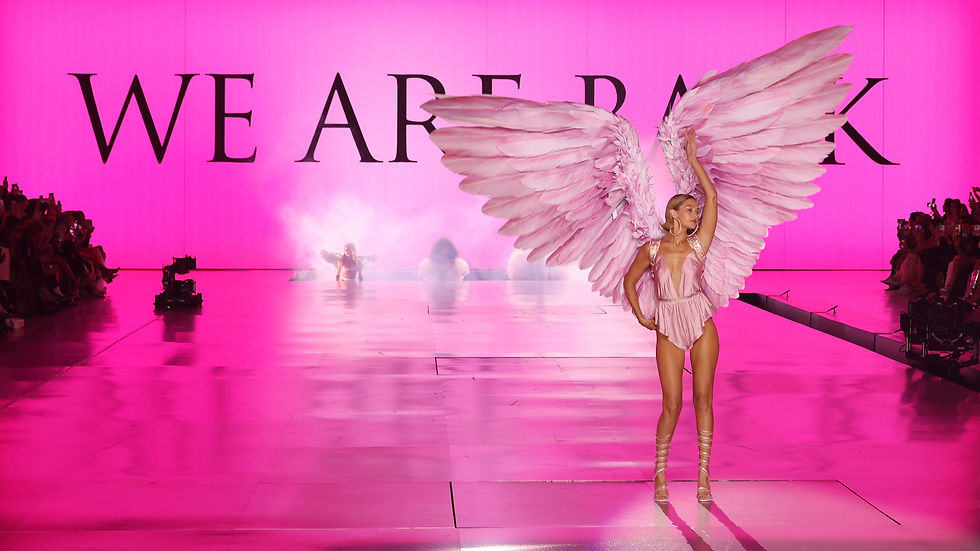
For decades, Victoria’s Secret defined the look and fantasy of American lingerie. It was glamorous, polished, and unmistakably confident. Yet by the late 2010s, the brand that once dominated malls and runways became a symbol of something out of touch. Sales slipped. The fashion show ended. Critics pointed to the company’s refusal to embrace changing conversations around body diversity, inclusion, and the realities of what women actually wanted from their underwear. For a moment, it seemed like the lingerie giant might have faded for good.
But Victoria’s Secret has made a deliberate and methodical return. Not as the exact same brand it once was, but as something trying to acknowledge its past while reimagining its identity. The comeback did not happen overnight. It took corporate restructuring, new leadership, new ambassadors, and a rethinking of the story Victoria’s Secret tells about women.
The most noticeable shift can be seen in the faces chosen to represent the brand. Instead of presenting one narrow ideal, Victoria’s Secret has highlighted athletes, actors, trans women, plus-size models, and women with a range of backgrounds and body types. This change feels significant. The brand that once insisted that confidence looked only one way is now using its platform to say that beauty is broader and more varied.
The new products reflect this as well. The recent collections have prioritized comfort, soft fabrics, flexible shapes, and everyday wear. The hyper-structured push-up bras of the early 2000s have taken a back seat to bralettes and uncomplicated silhouettes. The shift mirrors a larger cultural moment where women are steering away from dressing for the male gaze and more for their own ease and confidence.
This transition has not been perfect. Some customers still feel the brand is trying to repair an image rather than leading with authenticity. Others argue the change came too late. Still, it is undeniable that there are shoppers walking back into Victoria’s Secret stores who left years ago. They find something familiar in the pink stripes and satin drawers, but there is a different tone now. There is less pressure to become the brand’s idea of sexy and more invitation to choose something that feels like your own version of it.
The return of the fashion show in a reimagined form played a symbolic role in this shift. Instead of wings and glitter dominating the stage, the event incorporated documentary-style storytelling, creative performances, and personal narratives. It signaled that the brand understood it could no longer rely on spectacle alone. It needed meaning, perspective, and a connection that felt rooted in the present.
Victoria’s Secret did not simply come back. It learned to listen. The future of the brand will depend on how consistently it can follow through on that listening. The comeback is real, but it is not flashy. It is quieter, more intentional, and more attuned to the world women actually live in today.

Comments