Dressing the Part: Fashion, Identity, and Insecurity in Audrey Hobert’s Music
Updated: 5 days ago
Mars Oliver-Martinez
Music | Identity
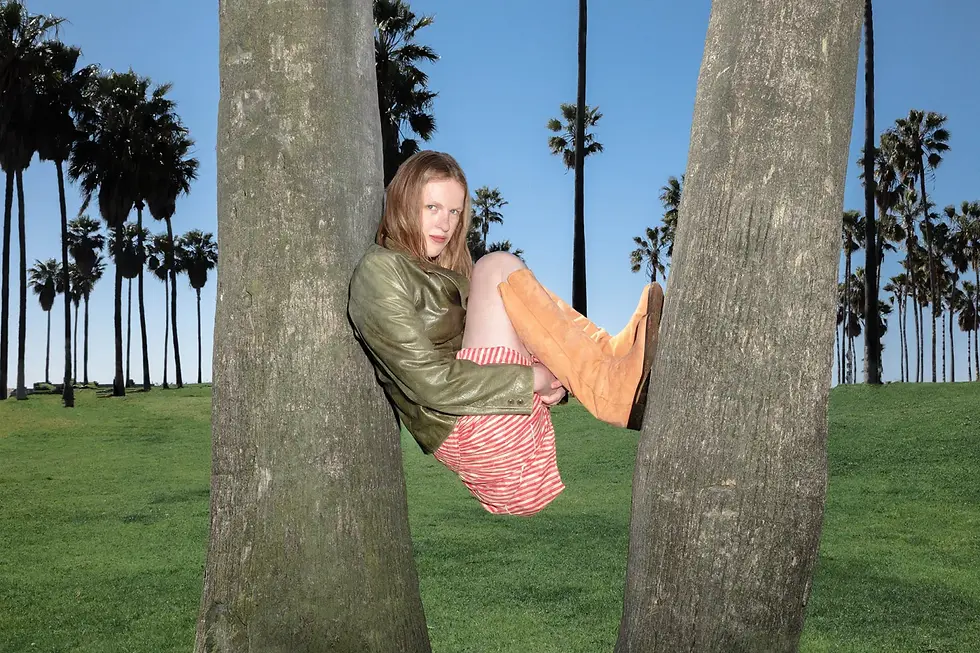
Audrey Hobert’s lyrics feel like flipping through the closet of a twenty-something’s mind – one filled with long dresses, cool jeans, lace nightgowns, and that familiar ache of trying to look like you have it together when you absolutely don’t. In her world, fashion isn’t just decoration – it’s emotional armor, a mirror, and sometimes, a beautifully constructed lie we tell ourselves.
In “Chateau”, Hobert sketches a character whose “long dress in the wind” feels both cinematic and suffocating – something that’s “slithered under the skin.” Here, the image of clothing blurs with identity; the dress becomes something she can’t quite take off, an aesthetic that owns her more than she owns it. Later, when Hobert asks, “It’s a party, girl, what are you hidin’ from?” She hints at the way fashion can become a shield for insecurity, used as a way to hide rather than express.
That tension between authenticity and appearance continues to reappear throughout her debut album, Who’s the Clown? In “Wet Hair”, the simple act of showing up “with wet hair” becomes a rebellion against expectation. It’s an anti-fashion moment that’s both unstyled and self-aware. There’s a fragile honesty in pretending not to care about how you look, and Hobert captures that contradiction perfectly: the desire to seem unaffected while desperately hoping you’re seen.
“Phoebe” takes this self-scrutiny even further, poking fun at the impossible task of aesthetic perfection. When she sings, “When the blue in my skirt doesn’t work with the blue in my top,” Hobert turns a clashing outfit into a metaphor for failing to fit someone else’s idea of beauty or success. Even in her offhand line about “a man in a suit” promising her she’s “going to be a star” peels back the glossy layers of pop culture’s obsession with image – where dreams are often tailored by someone else’s hands.
Then there’s “Sex and the City,” where Hobert dismantles the very fashion mythos that the TV show represents. She reminds us throughout the song that nobody’s watching her write in her room, stripping away the fantasy of constant spotlight. The “cool clothes” come off when the performance ends, and what’s left feels more real – fashion as costume, but also confession.
Across her songs, fashion becomes a language for self-expression that’s never free from self-doubt. Hobert’s characters are dressing up not just for the world, but against it – layering confidence over insecurity, fantasy over fear. Her lyrics capture what anyone who’s stood in front of a mirror knows: sometimes the outfit isn’t about looking good; it’s about believing, even for a moment, that you could.

Comments