The Sustainable Impact of Second-Hand Fashion

Helena Struzziery
Sustainability | Enviorment
Fast fashion has been an extremely profitable business for the past 50 years in America. Cheap materials and manufacturing have allowed companies to produce and ship clothes quickly to buyers. Brands like SHEIN, H&M, and Zara appeal to their customers with cheap, trendy pieces. However, the business is not as innocent as making and selling clothes. The fast fashion industry is now accountable for 10%, annually, of the global carbon footprint. It is undeniable that supporting fast fashion businesses is bad for the environment, but how else is one supposed to find cute, affordable clothes?
Second-hand shopping is the answer! There are many ways to buy and sell clothes, pre-owned clothes online or in person. Websites like Poshmark, Depop, Curtsy, and Grailed allow clothes to be resold. After creating their account, one is able to select their sizes, favorite brands, and pieces they are looking for, tailoring the website to themselves. Listings are posted constantly by sellers, often for very cheap prices. Most buyers are able to get clothes for nearly half the price they would have paid for them new. If the listed price is unappealing to a buyer, they are able to negotiate and bid new prices.
A common misconception about second-hand fashion websites is that they can be scams. It is reasonable to understand that, considering someone lists a picture of an item with a price, and someone buys it without seeing it in person. However these websites provide safe and secure transactions. Sellers often have to go through verification processes and provide information about shipments. This way, in the event that a listing is a scam, the website is able to track down the seller.
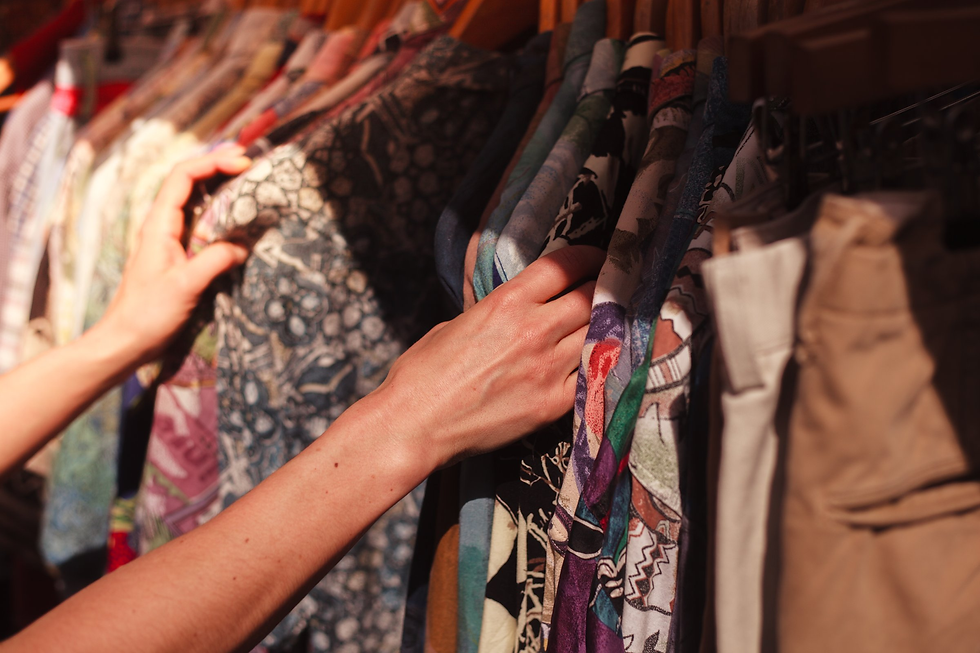
Another way to buy clothes sustainably is by going to thrift shops. Thrifting is the most reliable way to buy second-hand clothing, as one is able to try on the items in person. There are many thrift stores around Boston, including the Gament District and the Attic in Cambridge, Groovy Thrifty in Brighton, and Savers in West Roxbury. The Garment District, in particular, guarantees affordable pieces. Customers are able to look through piles of clothes and buy multiple pieces at a price of $2.00 per pound.
Buying off websites and going thrifting is not only an affordable way to buy new clothes, but it is significantly more sustainable than fast fashion. Over 11 million pounds of textiles end up in landfills in the United States alone. Buying a piece of clothing that would otherwise get thrown away not only prevents it from ending up in one of these landfills, but also the consumer no longer has to buy from a fast fashion website. If every consumer replaced their usual buy with a piece of second-hand clothing, carbon dioxide emissions would go down by two billion pounds. This would be more than taking 75 million cars of the road for a day. This is also a reason to sell and donate clothes. Pieces of clothing are out of style or you just don’t like anymore could be something worth buying to someone else. Therefore, it is important to donate old clothes to your local thrift store. It is also worth it to set up an account on one of these websites for clothes you maybe grew out of, that still have some value. This way, you are able to earn money on something you would otherwise toss in the trash.
With the global warming crisis growing worse with every new statistic, it is easy to feel helpless in saving our planet. However, little changes in the ways you buy and sell your clothing go a long way. If everyone chose to make a decision like that, the impact would be significant.



Comments